
“We post every day and get likes, but zero calls. What’s the point?”
If that sentence sounds like something you’ve said out loud to a business partner or just to yourself while staring at another post with 40 likes and no message, you’re not alone. And you’re not doing it wrong in the way you probably think. The problem usually isn’t effort. It’s that most social media marketing for service businesses is built around a metric that was never supposed to be the goal: attention.
Attention is easy to get in 2026. Organic reach for brand accounts on legacy platforms has dropped to roughly 1.4%. This means even a healthy follower count barely guarantees anyone sees your post, let alone acts on it. And when people do see it, a like takes less than a second of effort. It signals almost nothing about buying intent. This is exactly why a post with 500 likes can generate more revenue than one with 50,000, and why a business with 10,000 followers can still not produce a single lead.
This piece is a contrarian reset: less about posting more, and more about prospecting deliberately. It covers a full B2B social media strategy of what to post, where to post it, how much time it should take, and how to make sure a good conversation actually becomes a booked call.
Table of Contents
- The dirty secret about social media marketing that nobody in your industry will say out loud
- Posting vs. prospecting: the difference between looking busy and generating revenue
- The 3 types of content that actually drive leads (and the 2 that only drive likes)
- LinkedIn for service businesses: the specific approach that books calls from posts
- Instagram for local businesses: how to turn DMs into discovery calls
- The social media audit: are you in the right 2 platforms, or the wrong 4?
- Building a 4-week content engine that runs on 3 hours a week
- Paid amplification: when to boost a post, when to run an ad, and when to do neither
- The social-to-CRM path: how to make sure good conversations become booked calls
The Dirty Secret About Social Media Marketing that Nobody in Your Industry Will Say Out Loud
Here it is: most service businesses are optimizing for the wrong outcome, and most agencies won’t tell them because “engagement is up” is an easier report to hand over than “we generated three leads this quarter.”
The uncomfortable truth is that nearly two-thirds of marketing leaders struggle to prove social media actually drives revenue. That’s because most measurement stops at the metrics that are easiest to report, not the ones that matter. Likes, follower counts, and impressions look great on a dashboard and tell you almost nothing about pipeline.
Meanwhile, small service businesses have a real, underused advantage here. They’re small enough to respond to trends and conversations quickly, without a six-person approval chain. This is a structural edge that big companies with layers of brand sign-off simply don’t have. The dirty secret isn’t that small businesses can’t compete on social. It’s that most of them are competing for the wrong prize.
Posting vs. Prospecting: The Difference Between Looking Busy and Generating Revenue
Posting is an activity. Prospecting is an outcome. The difference shows up the moment you ask: “What is this specific post supposed to make someone do?”
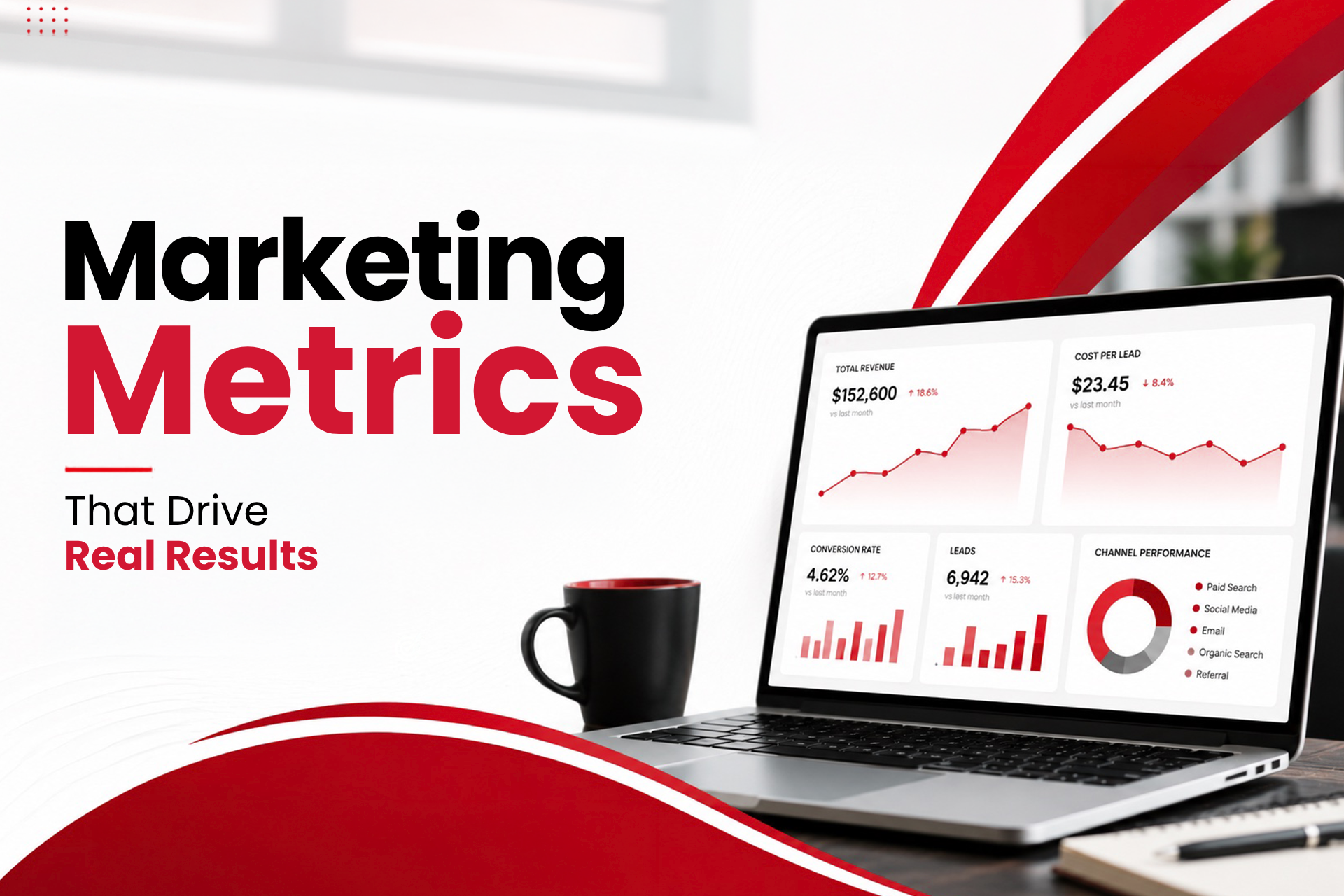
A useful framework here separates metrics into three tiers: attention metrics (reach, impressions), intent metrics (engagement rate, saves, click-through rate), and revenue metrics (conversion rate, cost per qualified lead). Most service businesses only ever look at the first tier. A post can go fully viral within its niche and still produce zero pipeline, because virality and buying intent are not the same thing.
Prospecting-oriented social media asks different questions before anything gets published: Who is this post trying to reach? What decision are they trying to make right now? What’s the one next step we want them to take? A “prospecting post” isn’t necessarily less creative or less engaging than a “posting post”. It’s just built backward from a business outcome instead of forward from “we need something to publish today.”
The 3 Types of Content that Actually Drive Leads (and the 2 that only drive likes)
Not all engagement is equal, and the type of interaction a post generates says more than the volume of interactions it gets. A like takes under a second. A share requires the poster to stake their own reputation on your content. A save signals someone found real, reusable value and wants to come back to it. This hierarchy of effort is also a hierarchy of buying signal.
The 3 types that drive leads:
- Educational frameworks and checklists. Posts that teach something specific like a step-by-step process, a checklist, a “here’s exactly how to evaluate X”, consistently generate the highest save rates. Saves signal someone plans to act on the content later, not just admire it.
- Proof and case-style content. Before/after results, specific outcomes, and client-style stories (without needing to name real clients) build the kind of trust that converts a stranger into someone willing to book a call.
- Direct-address problem posts. Content that names a specific, narrow pain point your ideal client has right now tends to prompt DMs and comments asking “does this apply to me?”. This is the exact conversation that leads to a discovery call.
The 2 that mostly drive likes:
- Trend-jacking without a business tie-in. Jumping on a meme or trending audio might spike reach, but if there’s no line back to your actual service, it produces attention with no direction.
- Generic inspirational or “thought leadership” posts. Broad statements like “consistency is key” or “success takes hard work” get easy likes because they’re agreeable to everyone and specific to no one, which also means they rarely move anyone toward a decision.
LinkedIn for Service Businesses: The Specific Approach that Books Calls from Posts
If your service business sells to other businesses, LinkedIn isn’t optional, it’s disproportionately where the leads already are. LinkedIn is responsible for roughly 80% of all B2B leads generated via social media, and 89% of B2B marketers already use it specifically for lead generation. Four out of five LinkedIn members influence purchasing decisions at their companies, which is why the platform converts so differently from consumer-facing networks: LinkedIn’s visitor-to-lead conversion rate sits around 2.74%, nearly three times higher than most other social platforms.
A few specifics matter for LinkedIn for service businesses trying to book calls, not just gather followers:
- Personal profiles outperform company pages by a wide margin, often generating roughly 8x more engagement. If you’re a service founder or consultant, posting from your own profile and having your company page amplify it usually beats posting from the company page alone.
- Consistency compounds visibility. Companies posting 3–4 times a week see roughly double the engagement lift compared to sporadic posting, and only around 1% of LinkedIn’s massive user base posts daily — meaning consistent posting alone creates outsized visibility in a mostly quiet feed.
- Document-style and carousel posts perform disproportionately well, often outperforming plain text posts by several multiples, likely because they mimic the “save this for later” behavior tied to genuine buying intent.
- Track the right KPIs. Move past impressions and start watching profile views from target accounts, inbound connection requests, lead magnet downloads, and the metric that actually matters — meetings booked.
Instagram for Local Businesses: How to Turn DMs Into Discovery Calls
For consumer-facing and local service businesses (salons, clinics, contractors, studios), Instagram often plays a different role than LinkedIn: it’s less about cold discovery and more about turning warm interest into a conversation. The mechanism that matters most here is the DM, not the comment.
Three habits consistently turn Instagram engagement into booked calls for local service businesses:
- Post content designed to prompt a question, not just a reaction. Behind-the-scenes process content, “here’s what a typical appointment looks like,” and specific pricing/package breakdowns tend to generate direct questions in the DMs rather than passive likes.
- Respond to every DM like it’s a warm lead, because it is. A prospect who DMs you has already done more work than 95% of your audience — they’ve decided you might be worth their time. Treat the reply speed and tone accordingly.
- Build a soft, low-friction next step into every DM conversation. Instead of “let me know if you have questions,” end conversations with a specific, easy yes: “Want me to send you two times this week that work?” Specific asks convert better than open-ended ones because they remove the decision-making burden from the prospect.
The Social Media Audit: Are You in The Right 2 Platforms, or The Wrong 4?
A common mistake among service businesses is spreading effort across four platforms instead of doing two platforms well. A simple audit resolves this in about 20 minutes:
- Where does your ideal client actually spend attention with buying intent? Not where they scroll for entertainment, where they research decisions. For most B2B service businesses, that’s LinkedIn. For most local and consumer service businesses, that’s Instagram (and often Google Business Profile, which isn’t “social” but behaves like one).
- Which platform has actually produced a real conversation in the last 90 days? Not a like a DM, a comment that led somewhere, a call booked. If a platform hasn’t produced this in three months, it’s a strong candidate to drop.
- Where do you have the bandwidth to post consistently, not sporadically? Consistency on two platforms beats inconsistency on four, every time, because algorithms and audiences both reward reliability.
If the honest answers point to two platforms, the fix isn’t “add more channels” — it’s reallocating the time currently split four ways into fewer, deeper efforts.
How to Plan a Month of Content in Just 3 Hours a Week
A sustainable content engine for a service business doesn’t require a content calendar with 30 unique ideas. It requires a repeatable structure:
- Week 1 — Educational anchor. One framework, checklist, or “how to evaluate X” post. This is your save-driving content.
- Week 2 — Proof post. A results-oriented story, case-style breakdown, or specific outcome. This is your trust-building content.
- Week 3 — Direct-address post. Name a specific problem your ideal client has right now, in their language, not yours. This is your DM-generating content.
- Week 4 — Behind-the-scenes or personal post. Something that humanizes the business — a process, a decision, a lesson learned. This keeps the account from feeling like a content vending machine.
Each week’s core piece can be repurposed into 2–3 smaller posts or Stories, which is how 3 hours a week becomes enough: one hour to create the anchor piece, one hour to adapt it into secondary formats, and one hour spread across the week for replying to comments and DMs, which, as covered above, is where the actual prospecting happens.
Paid Amplification: When to Boost a Post, When to Run an Ad, and When to do Neither
Not every piece of organic content needs paid support, but knowing when it does prevents both wasted budget and missed opportunity.
- Boost a post when: it’s already organically outperforming your average engagement rate, and you want to extend its reach to a slightly wider version of the same audience. Boosting works best as an amplifier of something already proven, not a rescue attempt for something underperforming.
- Run a full ad campaign when: you have a specific, high-intent offer (a free audit, a consultation, a lead magnet) and want to target a defined audience outside your current followers. LinkedIn ad conversion rates for B2B campaigns typically sit in the 2.5%–3.5% range, and LinkedIn’s B2B cost-per-qualified-lead is often around 28% lower than equivalent Google Ads spend, making it a reasonable channel to test paid budget on once organic proof exists.
- Do neither when: the underlying offer or landing experience isn’t ready. Paid spend accelerates whatever is already true about your funnel. if the offer is unclear or the follow-up process is weak, paid budget just gets you faster, more expensive proof of that same problem.
The Social-to-CRM Path: How to Make Sure Good Conversations Become Booked Calls
This is the step most service businesses skip entirely, and it’s the single biggest reason engagement doesn’t turn into revenue: there’s no defined path from “someone replied” to “someone’s on the calendar.”
A minimal social-to-CRM path looks like this:
- Every DM or comment that shows buying intent gets logged somewhere — even a simple spreadsheet counts as a starting CRM. The goal is that no promising conversation lives only in your Instagram inbox, never to be followed up on.
- A specific next step is offered within the same conversation, not left as an open invitation. “Here are two times this week” converts better than “let me know if you’re interested.”
- Automated reminders or CRM tags flag conversations that went quiet, so a prospect who said “let me think about it” gets a follow-up in 3–5 days instead of falling through completely.
Businesses that integrate social lead capture directly into CRM and automation tools consistently report far fewer socially-sourced leads slipping through the cracks compared to businesses treating social media and their sales pipeline as two disconnected systems.
Where Gyaata Fits In
Everything in this blog, the audit, the content engine, the platform choice, the social-to-CRM path, is a system. And most service businesses don’t have time to build one while also running the business it’s meant to support.
That’s the actual gap Gyaata closes. Not “we post content for you,” but the fuller loop: figuring out which platform your buyers are actually on, building content built to prompt DMs instead of just likes, and making sure those conversations land somewhere trackable instead of disappearing into an inbox. It’s the difference between having a social media presence and having a social media pipeline.
If you’ve read this far and realized you’re missing two or three of the nine pieces above, that’s usually the fastest place to start — not a full rebuild, just the missing links.
Want to See Which Platform is Actually Worth your Time?
Book a free social media audit. We’ll tell you which platform is worth your time, what content type fits your audience, and what’s missing in your current approach.
Frequently Asked Questions
- How is “prospecting” on social media different from just posting content? Posting is measured by activity — did something go out this week. Prospecting is measured by outcome — did this content move a specific person closer to a booked call. The content can look similar; the intent and follow-through behind it are what differ.
- Do service businesses need to be on every social platform? No. Most service businesses see better results doing two platforms consistently than four platforms inconsistently. The right platforms are wherever your ideal client actually researches buying decisions, not just scrolls for entertainment.
- Is LinkedIn worth it for a small, local service business? It depends on who buys from you. If you sell to other businesses or decision-makers, LinkedIn is disproportionately valuable given its outsized share of B2B leads from social. If you’re consumer-facing and local, Instagram (and Google Business Profile) usually matters more.
- How much content actually needs to be created each week? A sustainable content engine can run on one strong anchor piece per week, repurposed into 2–3 smaller formats, rather than a constant stream of unrelated new ideas.
- When should a service business start running paid social ads? Generally, after organic content has already shown some proof of working — a post performing above your average engagement, or a clear offer people respond to. Paid budget amplifies what’s already working; it rarely fixes an unclear offer or a weak follow-up process on its own.
References
- Martal Group — LinkedIn Lead Generation in 2026: 10 Key Tactics for B2B Successca/linkedin-lead-generation-lb
- Martal Group — LinkedIn Statistics 2026: Key B2B Benchmarks & Dataca/linkedin-statistics-lb
- ai — B2B LinkedIn Marketing: The Complete Guide for 2026 connectsafely.ai/articles/b2b-linkedin-marketing-complete-guide-2026
- Brenton Way — 60+ LinkedIn Marketing Statistics for 2026 [Updated Data]com/blog/linkedin-marketing-stats
- Martal Group — Lead Generation Statistics 2026: Benchmarks & Trendsca/lead-generation-statistics-lb
- Digital Applied — LinkedIn Statistics 2026: 140+ B2B Marketing Data Pointscom/blog/linkedin-statistics-2026-b2b-marketing-data
- Business Dasher — 65+ LinkedIn B2B Statistics & Emerging Trends (2026 updated)com/research/linkedin-b2b-statistics
- Linkboost — LinkedIn Marketing for B2B Service Businesses (2026 Guide)co/blog/linkedin-marketing-b2b-service-businesses-2026
- Hootsuite — Social Media Metrics to Track in 2026 (25 That Matter)hootsuite.com/social-media-metrics
- 123 Internet Agency — The End of Vanity Metrics: What Real Social Media ROI Looks Like in 2026agency/the-end-of-vanity-metrics-what-real-social-media-roi-looks-like-in-2026
- Social Pulse — The Death of Vanity Metrics: What Marketers Should Track Instead in 2026substack.com/p/the-death-of-vanity-metrics-what
- The Small Business Expo — 7 Metrics For Social Media Marketing That Drive Revenuecom/blog/metrics-for-social-media-marketing
WE Interactive — Social Media Engagement Strategy 2026: The Ultimate Trend Analysis & Playbook we-interactive.com/insights/social-media-engagement-strategy-2026-the-ultimate-trend-analysis-playbook