“We post every day and get likes, but it never turns into a phone call. What’s the point?”
If that sounds familiar, you’re in good company, and your frustration is fair. Here is the uncomfortable truth: posting and prospecting are two different activities, and most service businesses are only doing the first one.
Posting keeps your name visible. Prospecting uses social media to start conversations with people who could actually become clients. This guide breaks down the content that drives enquiries, the content that only drives applause, and a simple comment-to-DM routine that turns engagement into real conversations.
Posting vs. Prospecting: What’s the Difference?
Posting asks, “Did people see it?” Prospecting asks, “Did the right person reach out?” Those are very different questions, and they lead to very different content calendars.
For a service business, such as a clinic, law firm, accounting practice, consultancy, interior studio or home-services company, the gap matters even more. Nobody hires a service provider on impulse from a reel. They compare options, worry about trust, and want proof that you have solved their problem before. A post that collects 500 likes from friends, peers and passing scrollers does very little. A post that earns three thoughtful comments from the right people can fill your calendar.
That is why we treat social media as one part of a wider lead generation strategy, not a content calendar that lives on its own.
The 3 Content Types That Actually Drive Leads
1. Proof content
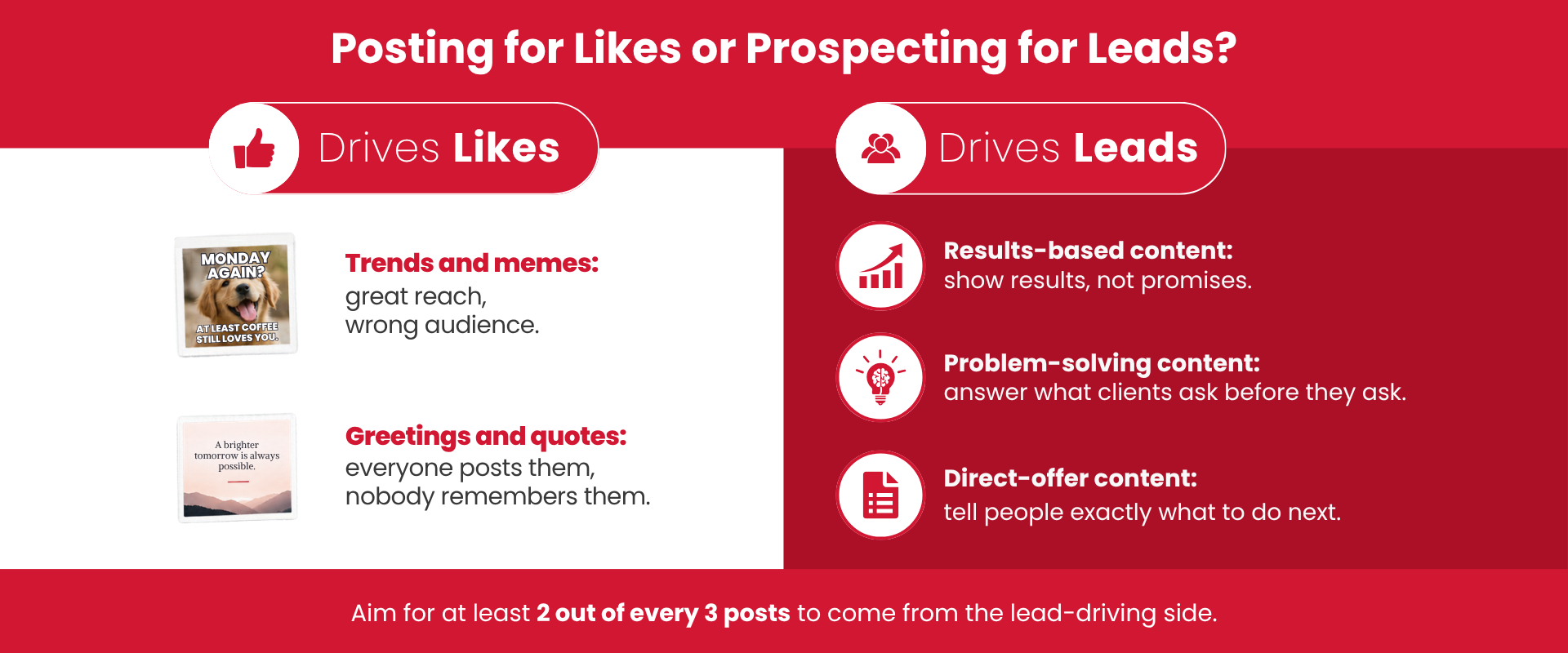
Services are intangible, so proof makes them visible. Case studies, before-and-after results, client stories, testimonials and real numbers all answer the question every prospect is silently asking: “Can you do this for someone like me?” A post titled “How we halved a clinic’s cost per enquiry in 60 days” will outperform “Happy Monday!” every time. If you want to see how we present results, browse our portfolio.
2. Problem-solving content
Answer the exact questions your prospects ask on discovery calls: what it costs, how long it takes, which mistakes to avoid, how to choose a provider. This kind of educational content positions you as the one who knows, and it builds trust before the first conversation. People who have learned something from you are far more likely to message you than people who have simply been entertained.
3. Direct-offer content
Many businesses never actually ask. A direct-offer post states what you do, who it is for and what to do next, for example: “Comment AUDIT and we’ll send you a free review of your profile.” It feels bold, but it is the content type that most clearly turns attention into action. A good rule of thumb is to include one in every four or five posts.
The 2 Content Types That Only Drive Likes
1. Trend and meme content
Trending audio and memes are brilliant for reach and weak for relevance. The audience laughs, scrolls on, and forgets who posted it. Used sparingly, they add personality. Used as the main meal, they attract the wrong audience and give the algorithm the wrong signals about who you serve.
2. Generic inspiration and greetings
Festival wishes, motivational quotes and stock-image tips are easy to produce and easy to ignore. Every competitor posts the same thing, so nothing in it tells a prospect why they should hire you. These posts keep the lights on, but they do not open doors.
You do not have to delete them. As a rough guide, aim for at least two-thirds of your calendar to come from the three lead-driving types, and treat the rest as seasoning.
The Comment-to-DM Mechanism: How Engagement Becomes Conversations
Even the best post will not generate a phone call by itself. The real work happens in the comments and the inbox. Here is a simple five-step routine any service business can follow.
- Give people a reason to comment. End the post with a clear prompt or a keyword, such as “Comment CHECKLIST and we’ll send it over.”
- Reply publicly and quickly. Respond to every comment within a few hours, adding something useful rather than just a thumbs-up. Public replies also show other readers that you are responsive.
- Move to the DM with a personal message. For example: “Thanks for your comment! Happy to share the checklist. What are you hoping to fix right now?”
- Qualify gently. Ask one or two simple questions about their need, timeline and situation so you know whether you are a good fit.
- Offer a clear next step. A short call, a free audit or a quote. Do not leave the conversation hanging.
A few cautions. Automation tools can deliver a resource, but a human reply is what builds trust, so keep the conversation personal. Stay within each platform’s messaging rules and avoid mass-messaging strangers. And keep a simple tracker, even a spreadsheet, noting where each conversation started. Tracing every enquiry back to its source is the same discipline we apply in our performance marketing work, and it is the only way to know which posts truly earn their place.
A Simple Weekly Rhythm You Can Actually Stick To
Knowing the content types is one thing; fitting them into a busy week is another. Most service businesses do well with a light, repeatable rhythm like this:
- Monday, proof: a short client result, review or before-and-after.
- Wednesday, problem-solving: a quick answer to a question your prospects keep asking.
- Friday, direct offer: a clear invitation, such as a free audit, a checklist or a consultation slot.
Block thirty minutes after each post to reply to comments and start conversations. That window is where the prospecting happens, and it is the part most businesses skip. If you can only do one thing differently this month, make it this: treat the comments section as your inbox, not an afterthought.
Which Platform Is Actually Worth Your Time?
Being on every platform is a fast way to do everything badly. A better question is where your next client is already spending time.
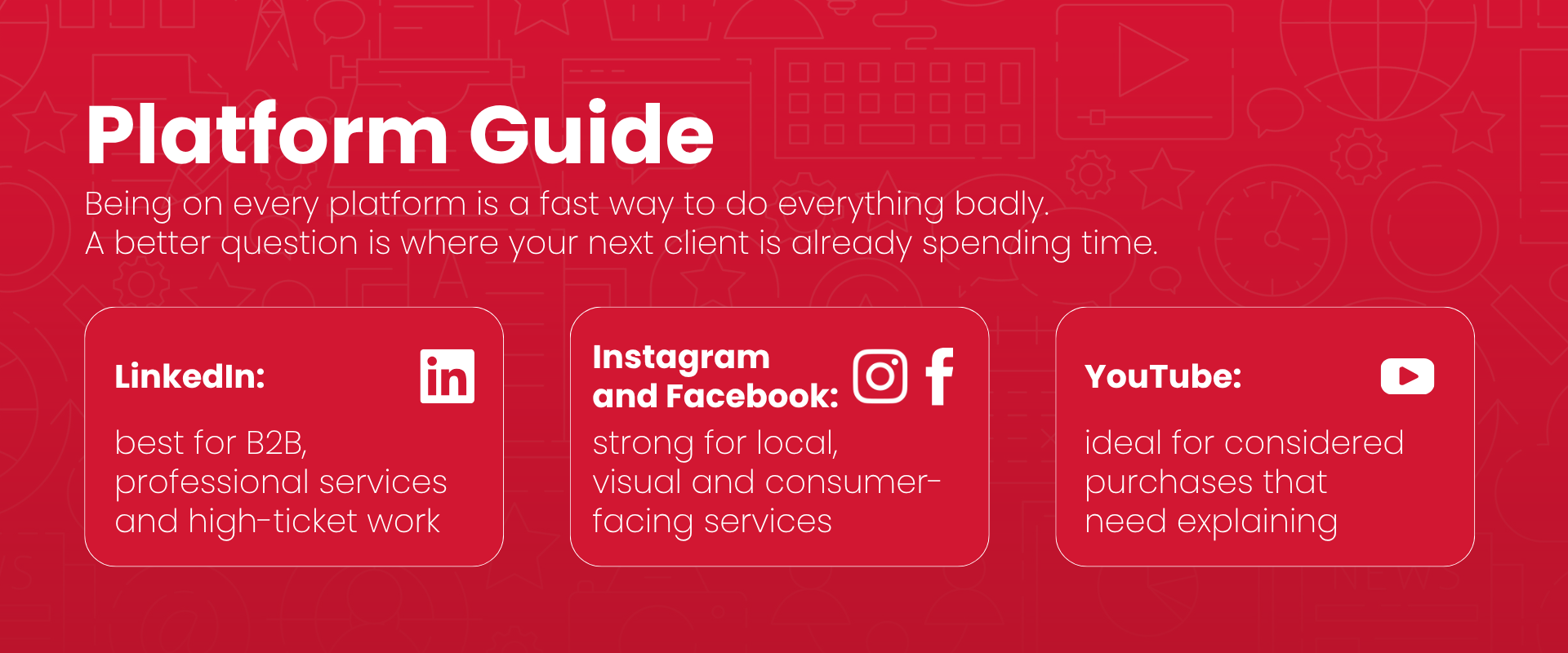
- LinkedIn: best for B2B, professional services and high-ticket work, where buyers research the person behind the business.
- Instagram and Facebook: strong for local, visual and consumer-facing services, especially when you can show results and reviews.
- YouTube: ideal for considered purchases that need explaining, where a client wants to watch you think before they call.
Industry roundups, such as this collection of social media statistics from Databox and this lead generation statistics guide from WPForms, regularly place LinkedIn and Facebook among the stronger lead channels. Still, averages are not your business. The right platform depends on your service, your price point and your audience.
Don’t Just Post Every Other Day
Social media does not fail service businesses; posting without a plan does. When your content proves you can deliver, answers real questions and invites people to take the next step, likes become a side effect rather than the goal. Stop posting to be seen. Start posting to be contacted.
Get a Free Social Media Audit
Not sure where to focus? Our free social media audit reviews your current profiles, content mix and engagement, then tells you which platform is actually worth your time and which can wait. You will walk away with a clear, honest picture of what is working and what is only collecting likes. Request your free audit, or explore how our digital marketing services can support the next step.

Frequently Asked Questions
How often should a service business post on social media?
Consistency matters more than volume. Three or four purposeful posts a week, mixing proof, problem-solving and direct-offer content, will usually beat daily filler.
Do likes matter at all?
Likes show reach, not revenue. Track enquiries, DMs started, calls booked and cost per lead instead, because those are the numbers that connect to income.
How long before social media brings in leads?
It varies by industry, audience and how quickly you respond, but many businesses see their first genuine conversations within four to eight weeks of consistent, offer-led posting.
Do I need paid ads to get leads from social media?
Not necessarily. Organic proof and educational content can generate enquiries on their own, though ads can speed things up by putting your best-performing posts in front of more of the right people.
Which metric should I track first?
Start with conversations: how many comments turn into DMs, and how many DMs turn into calls. That one chain tells you more than follower counts ever will.
What if people comment but never reply to my DMs?
Keep the first message short, personal and easy to answer, with one clear question. Also check your timing: replying within a few hours makes a noticeable difference to response rates.
Is social media enough on its own?
Rarely. Social media works best alongside search visibility, a clear website and a follow-up process, so the interest you create has somewhere to go once people want to know more.